I'm so tired of being told AI will take my job
The fear of AI made me feel outdated before the future even arrived
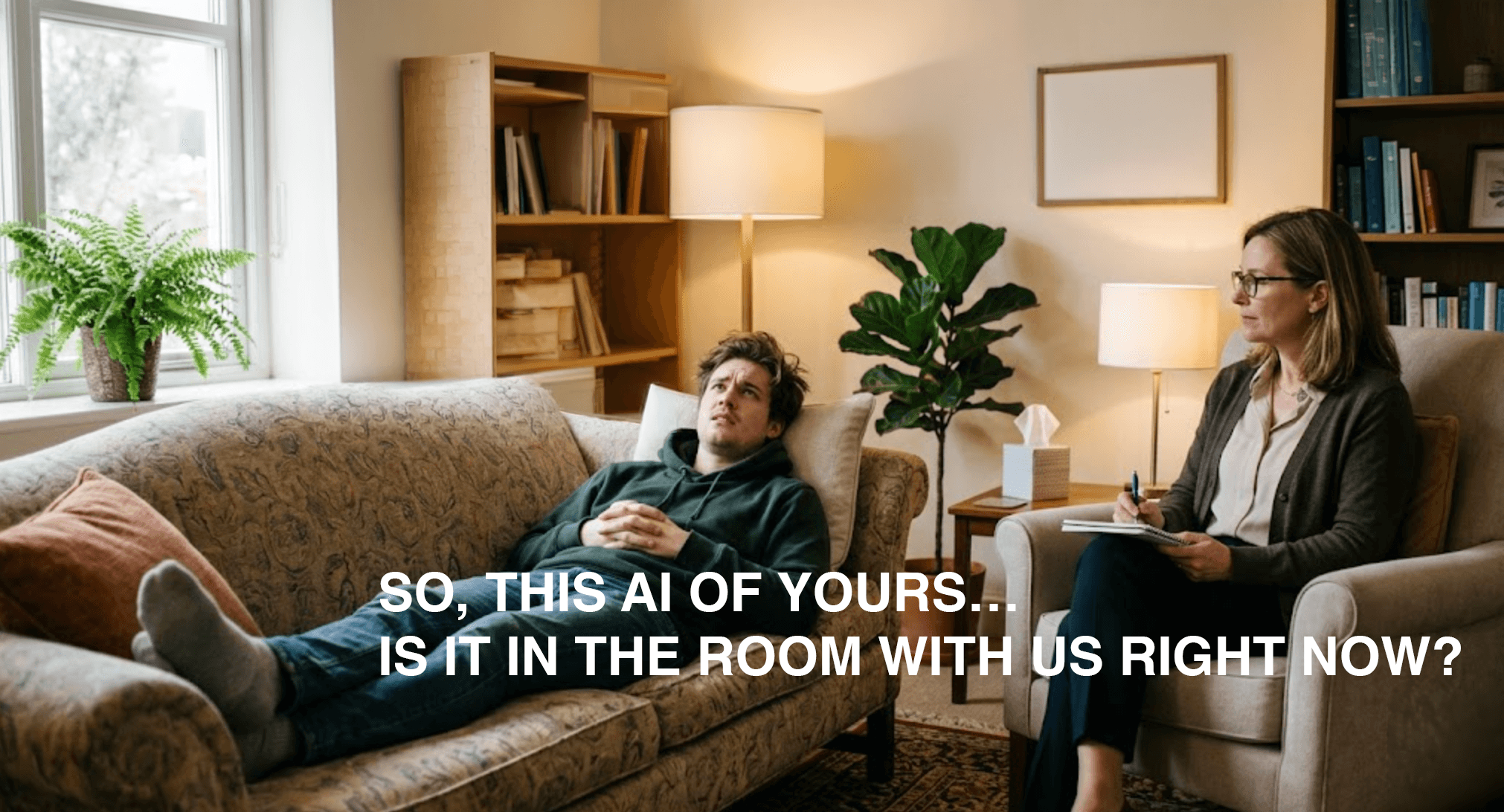
I am so tired of reading headlines like: “AI will take your job,” “Company Y laid off 60% of its employees because of AI,” or “You are just an AI operator now.”
So I decided to understand why these headlines affect me so much.
Sometimes it feels personal. Sometimes it creates real anxiety. I open Twitter, LinkedIn, or YouTube, and after ten minutes I feel like my profession is already dead, my skills are outdated, and I am somehow late to a future that has not even fully arrived yet.
AI has not replaced me. I am still working. I am still active.
So why does a future that has not happened yet already affect my mood?
Why can an idea reduce my productivity before reality does?
“Your work will soon become useless.”
At first, I thought this was just normal professional anxiety. Technology changes, markets change, companies fire people, new tools appear. That is life.
But then I started thinking about stereotypes.
The connection was not obvious to me at first. I was not even reading about AI. I was reading research from decades ago, about something completely different. But the more I thought about it, the more I started to see the same pattern.
A stereotype is powerful because it gives you a simple formula for the world.
Men do not understand emotions.
Old people are bad with technology.
Women are bad at math.
These stereotypes are different, and they affect people’s lives in different ways, but they have something in common.
A stereotype takes a whole person and shrinks them into one function.
Simplified formulas about groups of people are easy to believe, especially when the whole environment repeats them every day.
There is a well-known example involving women and math exams. When women are reminded of the stereotype that women are worse at math, their results can become worse. Not because they suddenly become worse at math, but because they start carrying an extra mental load. While solving math problems, they are also trying not to confirm the stereotype.
When we are trying not to confirm a stereotype, we start watching ourselves from the outside.
We double-check simple answers. We become slower. More careful. More tense.
Part of the brain is solving the problem, and another part is asking:
“What if they were right?”
I think many of us know this feeling from work.
Remember when someone was standing behind you while you were doing something on your laptop?
You know how to do the task. But suddenly your hands become stupid. You start thinking: “Am I doing something wrong?”
And I think something similar is happening with AI anxiety.
For the last several months, I felt like I was living inside a narrow image of my own profession:
“A developer is a person who only writes code.”
AI writes code faster. So a developer will soon be useless.
I assume people in other professions that work with computers see something similar: copywriters, designers, teachers, account managers, recruiters, video creators, writers.
And if you accept this frame, you start fighting on the worst possible field.
You try to beat the machine at being a machine.
You try to prove that you are still valuable as an information generator.
But maybe “coder” was never the full description of my job.
A whole person becomes reduced to one role:
“A developer typing slower than AI.”
And then you start living inside that smaller version of yourself.
In my case, it created procrastination. Not dramatic panic. Just this quiet resistance in the background:
“Why even learn something new? It will be automated anyway.”
The potential future becomes an excuse not to act in the present.
Maybe AI will replace many jobs. Maybe software engineering will change completely. Maybe some parts of my work will disappear. I cannot control that.
But I can accidentally damage myself before any of that happens.
I can start living as if I am already obsolete.
Another important thing is the environment.
In education, there is this idea that being surrounded by very strong people does not always make you stronger. Sometimes it motivates you. But sometimes it breaks your confidence.
If you were one of the best students in one place, and then you move to a place where everyone is faster, smarter, and more prepared, you may start thinking: “I am not that good.”
And after some time, your motivation changes.
You stop trying to become excellent.
You start trying not to look stupid.
“I won’t take on this task because my result would not be considered impressive anyway.”
I think the AI information environment creates a similar feeling for developers.
Before, many developers felt strong. We could build products, automate processes, solve problems, and create value from almost nothing.
Then suddenly the environment started saying:
You are not special anymore. You are just a prompt operator.
One person with AI will replace the whole team.
Soon companies will not need developers.
Even if some of this is partly true, the emotional effect can still be toxic.
It creates an environment where you always feel behind.
And feeling behind every day does not always push you forward.
Sometimes it freezes you.
I also think we should be careful with big predictions.
Companies can be wrong. Founders can be wrong. Very smart people can be wrong, even if they are nice and polite. Good people can do bad things.
Some technologies look inevitable in demos, but reality is more complicated.
Virtual reality was supposed to replace normal screens for many use cases. It did not. At least not in the simple way people expected.
Cashierless stores looked like an obvious future. You walk in, take something, walk out, and the system understands everything.
But then reality appears: cost, mistakes, edge cases, human review, customer behavior, operational complexity.
Many things look easy from a distance.
Then humans appear.
Budgets. Laws. Integrations. Trust issues. Bad data. Managers. Users.
And suddenly, “just automate it” becomes much less simple.
AI is not fake.
I am not saying AI will not replace anything. It already replaces some tasks.
But I do not want to turn every loud prediction into a personal sentence.
There is a difference between preparing for change and living under a curse.
So what can help?
I think the first thing is to break the stereotype.
If the stereotype says, “Developer = person who writes code,” then I need to remind myself:
No.
That is too narrow a concept.
A developer is also a person who understands problems, talks to other people, notices contradictions, and takes responsibility.
I can connect business, product, users, and implementation.
AI did not see the client’s face when they said one thing but meant another.
It does not carry responsibility in the same way a human does.
The second thing is to change the environment.
If my feed makes me anxious every day, maybe my feed is not “information.”
Maybe it is a machine for producing helplessness.
I do not need to read every apocalyptic tweet.
I do not need to follow every founder who sells the future as panic.
I do not need to consume ten posts a day telling me that everything I know is useless.
I can choose a better environment.
People who are honest about AI without turning everything into doom.
I cannot control AI development. But I can control what I feed my brain every morning.
Maybe AI will replace all of us one day. Maybe tomorrow. Maybe in ten years. Maybe in fifty years. Maybe never in the way people imagine.
I do not know.
But while preparing this text, I understood one thing:
I do not want to hurt myself earlier than reality does.
Living inside someone else’s stereotype is not wisdom.
I need to become a person who is better at working with machines, people, and the messy reality between them.
Author: Alex Dmowski
Co-Author: Chat GPT 5.1 (Grammar correction and editing)
Published on: June 24, 2026
